How Digital Imaging Drone Technology Supports River Restoration
Discover how we use one technology in myriad ways to support some very different river and catchment improvement, restoration and remediation projects
Digital imaging drone technology is transforming the way river restoration projects are planned, delivered and monitored. Once primarily used for military reconnaissance, modern drones are lightweight, digitally stabilised and often AI-assisted, making them powerful tools for environmental conservation. Today, they are widely used by organisations ranging from emergency services to river trusts, like ours.
We use drone surveys to support a wide range of river and catchment restoration work, including Natural Flood Management (NFM), fish passage barrier removal, and the remediation of pollution from historic metal mining. Drone technology saves time and money, improves accuracy, and enables more effective long-term monitoring. It also helps us communicate project outcomes to partners, funders, stakeholders and the public. In some cases modelling software allows us to virtually test different restoration scenarios before any work takes place.
Using Drones for Natural Flood Management Projects
Patrick Lane – Assistant Project Officer
“I work on an NFM project that uses drones alongside advanced modelling and analysis tools.
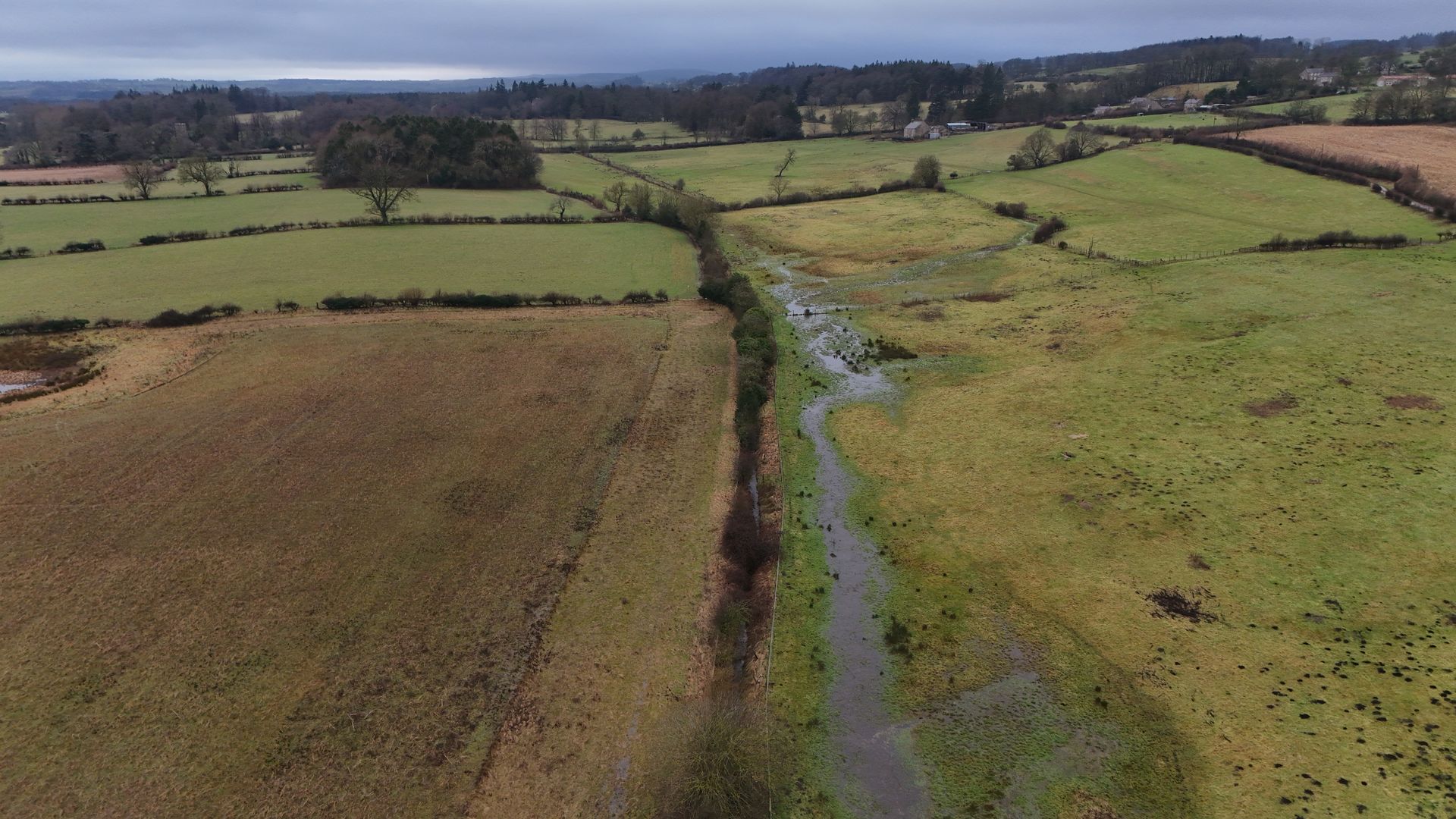
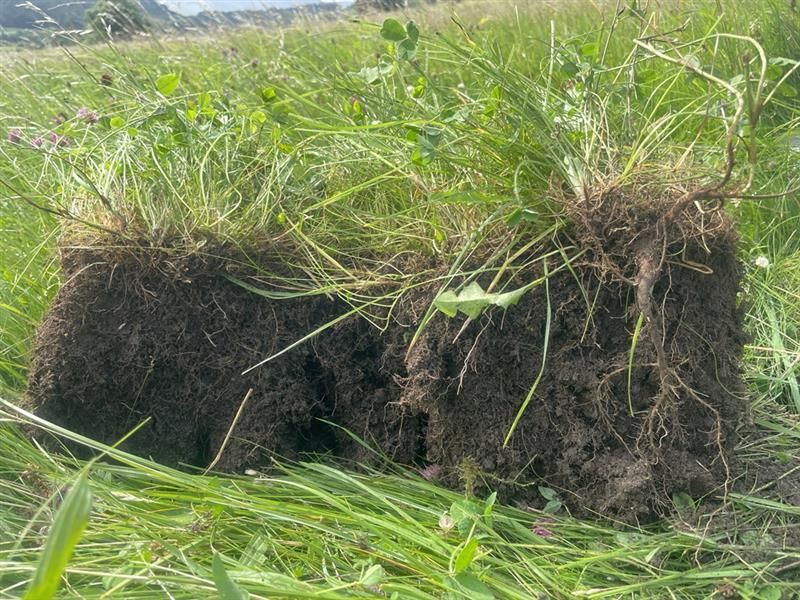
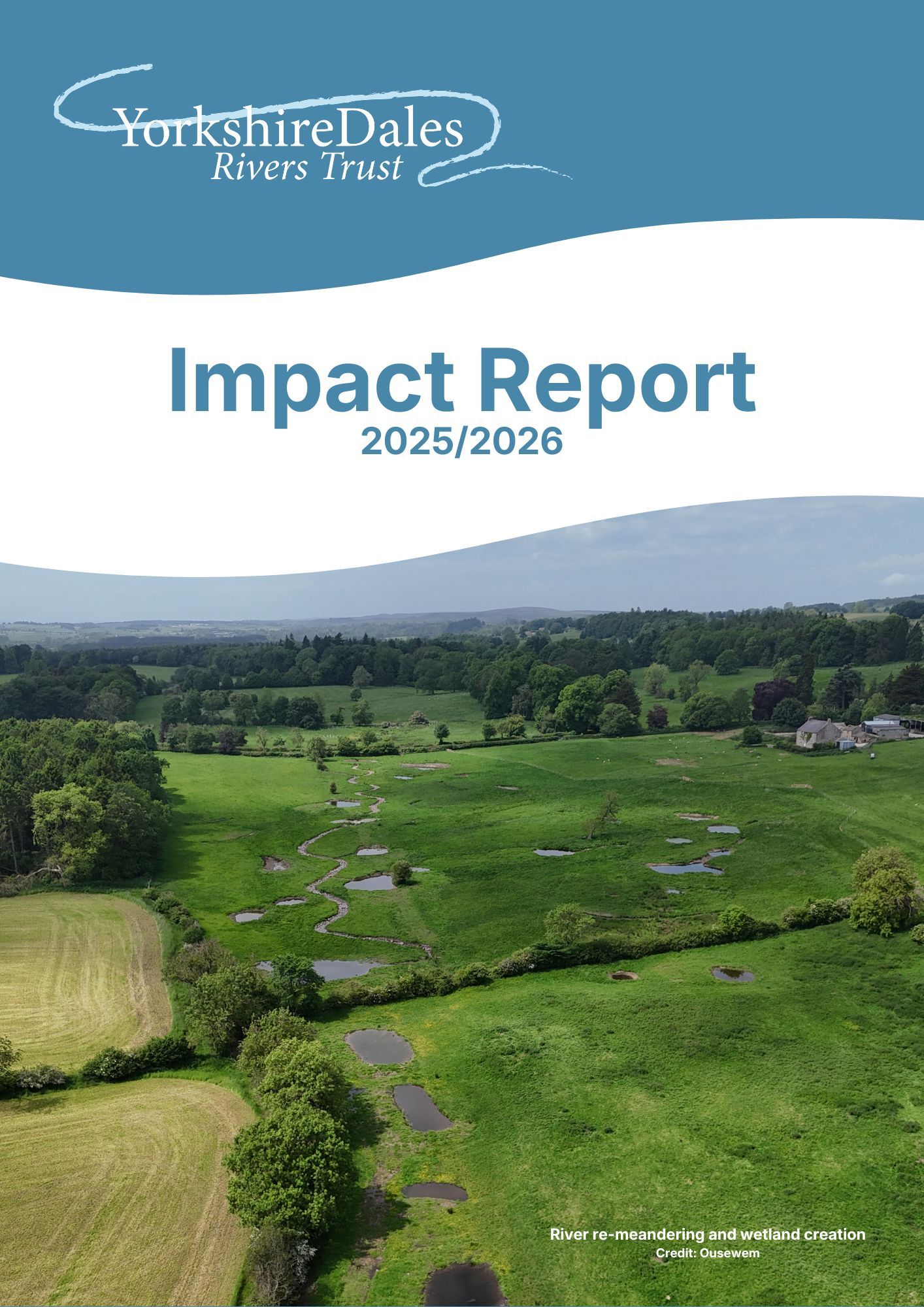
“When we begin work in a new area, we first carry out a drone survey to record baseline conditions. This allows us to assess watercourses, wet areas and key landscape features. Once we’ve identified suitable NFM interventions − such as scrapes, ponds, leaky dams, wetlands, hedgerows or reconnecting a watercourse to its floodplain, we create a fixed video of the site. This maps an exact flight path with precise GPS coordinates, essential for accurately monitoring change over time.
“Understanding how water moves across a site is especially important for landowners and partners. Drone data allows us to show how NFM measures increases water storage, improves infiltration and helps ‘slow the flow’. We combine drone footage with impact modelling software to clearly demonstrate how interventions are changing hydrology and reducing flood risk.”
Drone Surveys for Mine Pollution Remediation
Ellen Shields – Senior Project Officer
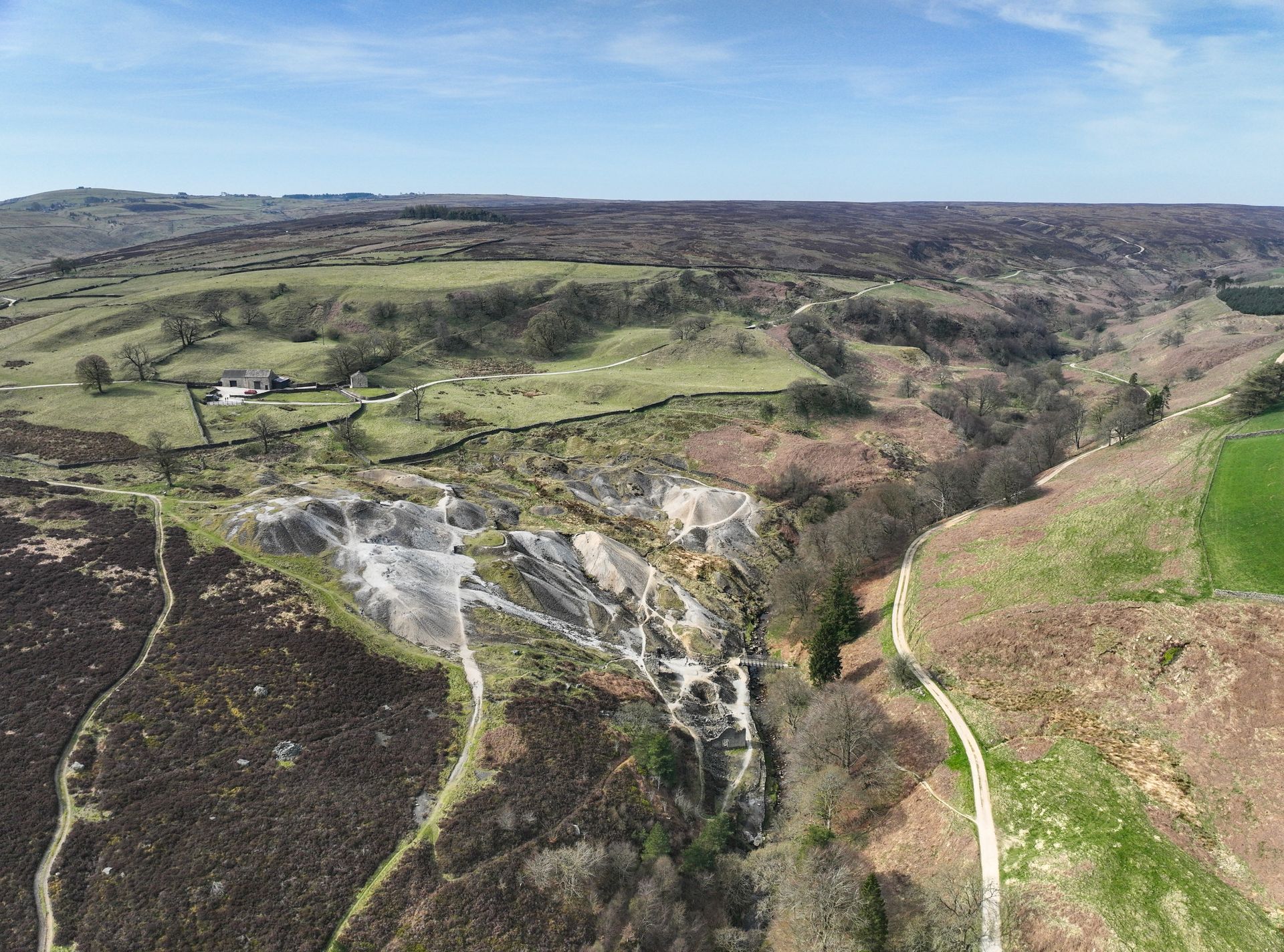
“Drone technology plays a vital role in addressing the legacy of historic lead mining. Our drone surveys generate thousands of high-resolution images, which are stitched together to create an orthomosaic. This produces a highly detailed, geo-referenced map of a large area, allowing restoration interventions to be planned with pinpoint accuracy.
“Specialist drone surveys also help us analyse site topography as well as the distribution and health of vegetation. This type of multi-spectral environmental data is useful for identifying areas of high-risk erosion. Data analysis of drone footage can also help us to assess riverbed stability, erosion and sediment movement – information that is critical when designing effective remediation measures.
“Repeating drone surveys over time is a brilliant way to monitor progress, track vegetation recovery and determine areas that may require further work.”
Improving Fish Passage and River Connectivity with Drones
Sarah Lonsdale – Project Manager
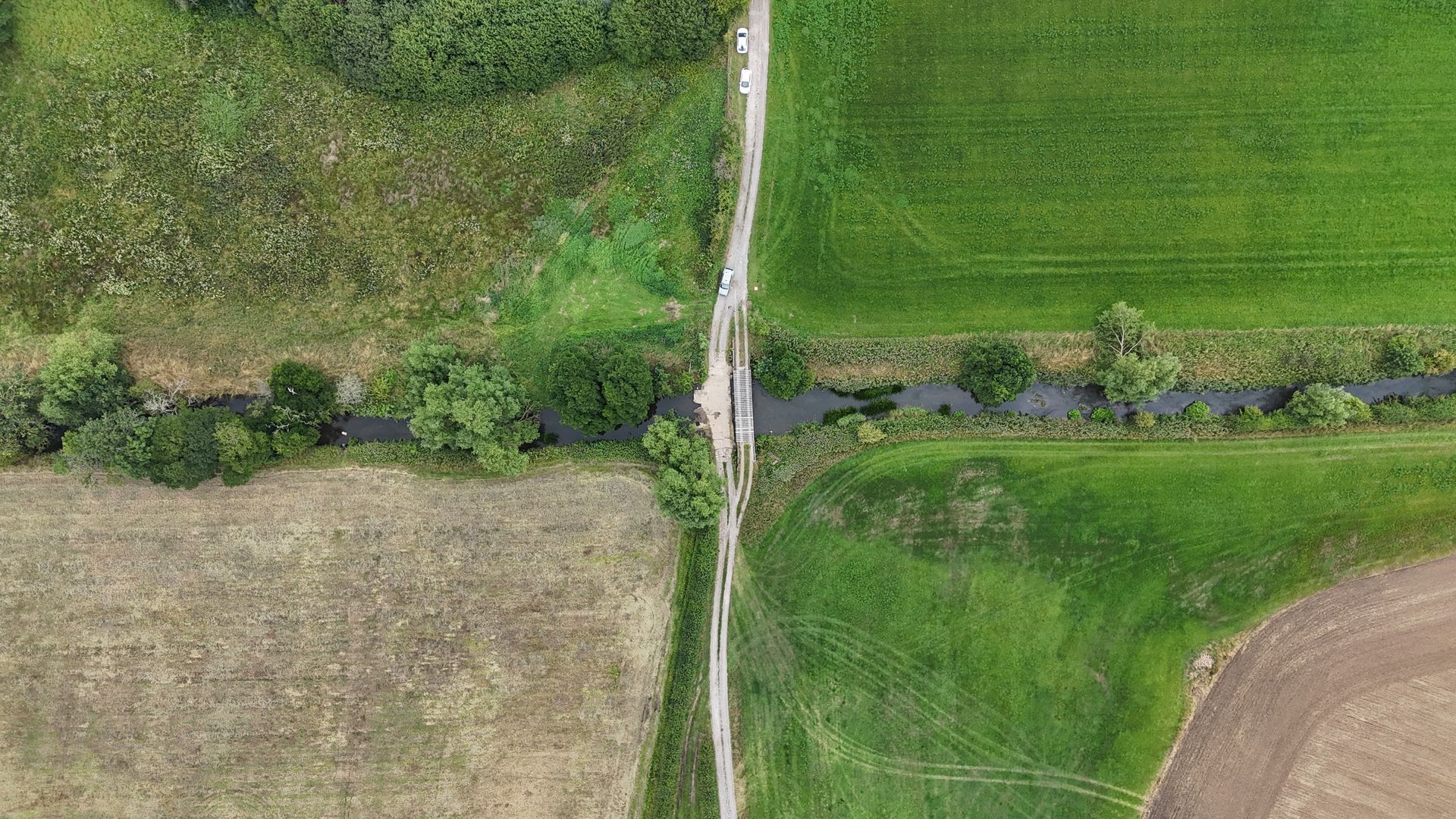
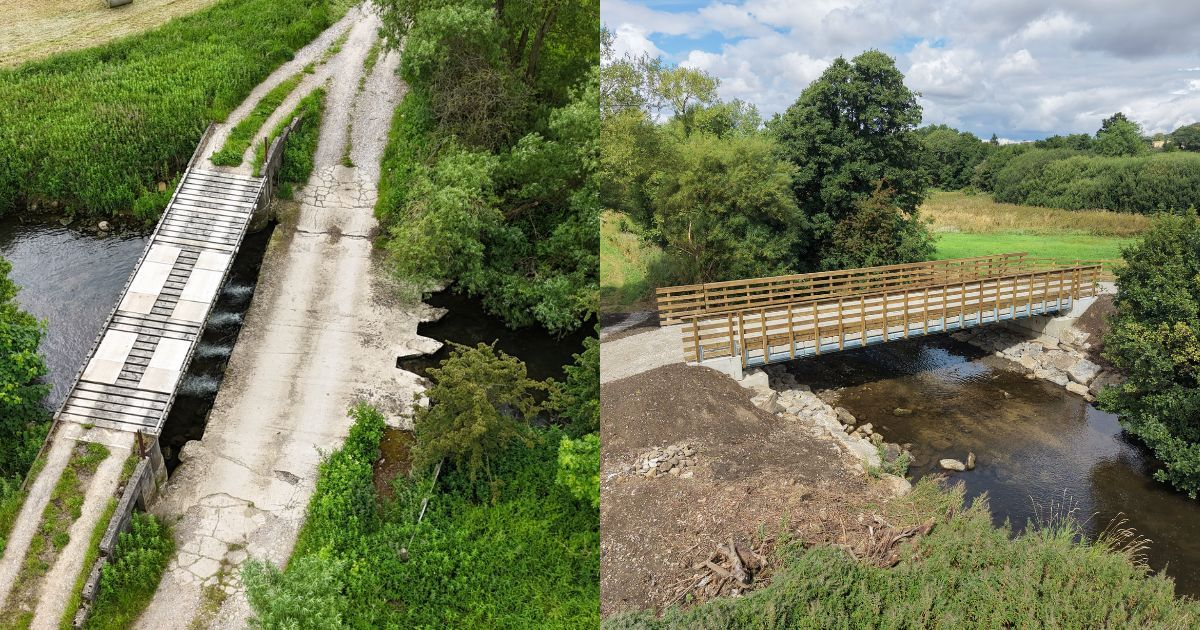
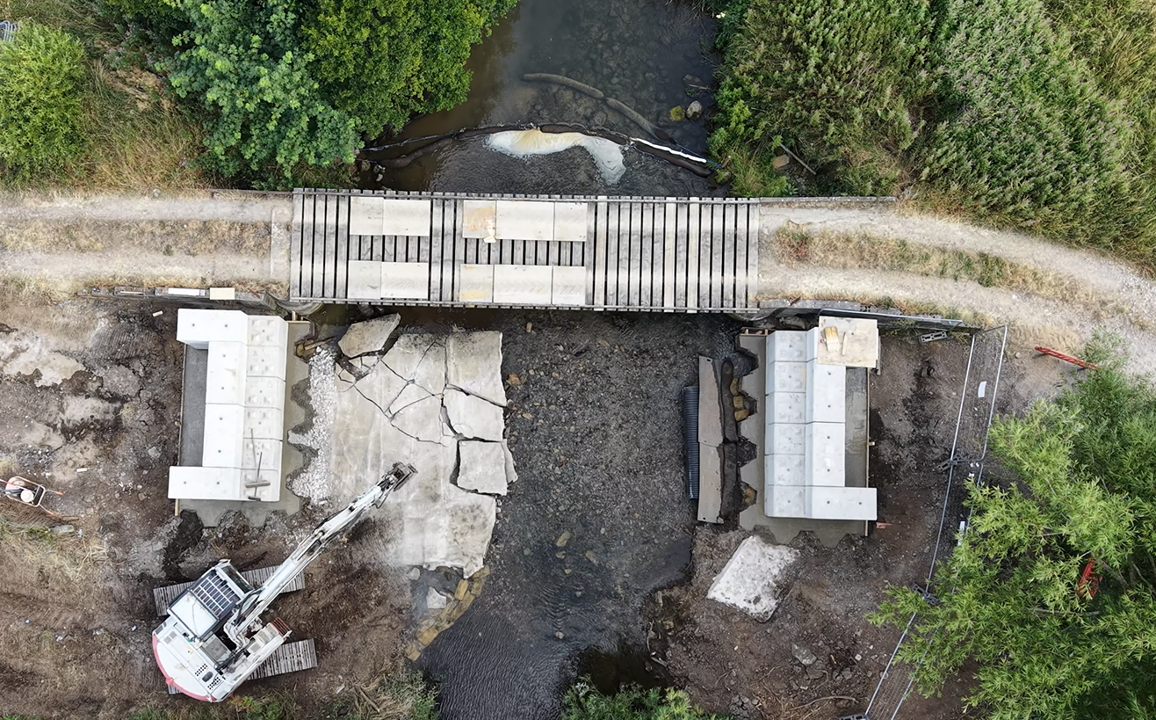
“One of my projects involves removing a ford, which can be significant barriers to fish migration, since many fish species rely on free movement between upper and lower catchments of a watercourse to access suitable spawning habitats.
“Drone footage has been invaluable in this project. It provides a clear aerial view of the beck and its hydrological features, including flow paths and channel structure. This allows us to understand exactly how water moves through the landscape and within the river channel itself. Drones also help us assess catchment characteristics such as riparian tree cover, channel modifications, barriers and areas of straightening.
“In this case, drone imagery has clearly shown how the ford is impounding water upstream. After the barrier is removed, we’ll carry out follow-up drone surveys to assess improvements in river hydrology. We’ll be looking for more diverse flow patterns, helping to create habitat niches, transport sediment and improve gravel quality − all essential for healthy fish spawning.”
If you are aware of a barrier to fish migration (such as a weir, culvert, ford or sluice) on a watercourse on your land within the catchments of the Swale, Ure, Nidd, Ouse or Wharfe and would like us to assess it, please email: enquiries@ydrt.co.uk